Spray Foam Insulation in Oklahoma City: Closed-Cell, Open-Cell & Hybrid Systems
Spray foam is a family of products, not one. Closed-cell and open-cell foams do very different jobs in an Oklahoma City house, hybrid walls use foam only where it pays, heated slabs need board underneath, and exposed foam needs a listed barrier. This page sorts out which one your project actually needs, and when you need none of them.
How These Systems Differ
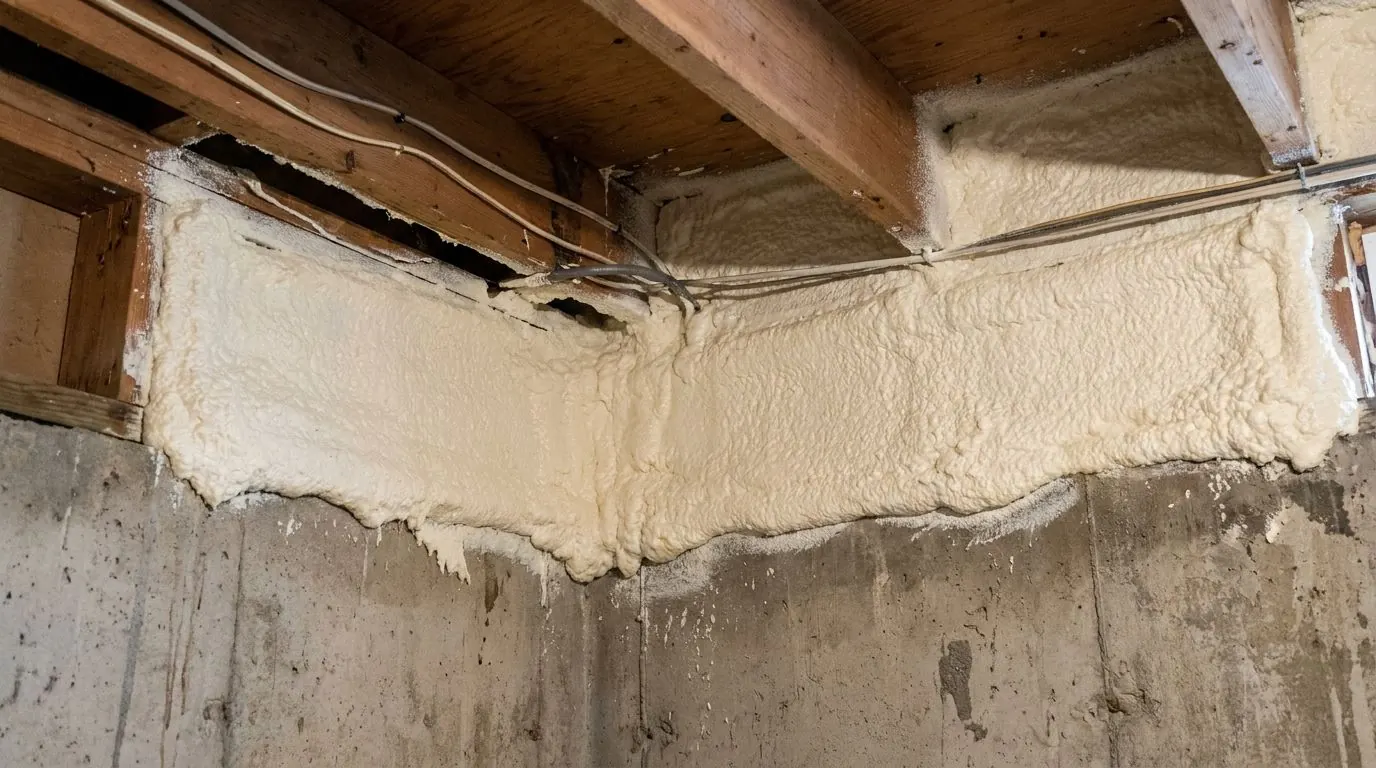
Spray polyurethane foam starts as two liquids mixed at the gun and expands into insulation that bonds to whatever it touches. That adhesion is the real difference from batts and loose-fill: foam seals the cracks, plate joints and odd shapes fibrous insulation leaves open, so it stops air as well as slowing heat. In climate zone 3, where cooling is the dominant load and humid summer air finds every gap, stopping that air is often worth as much as the R-value. Foam is also a combustible plastic, so in most places people use it needs a thermal barrier over it.
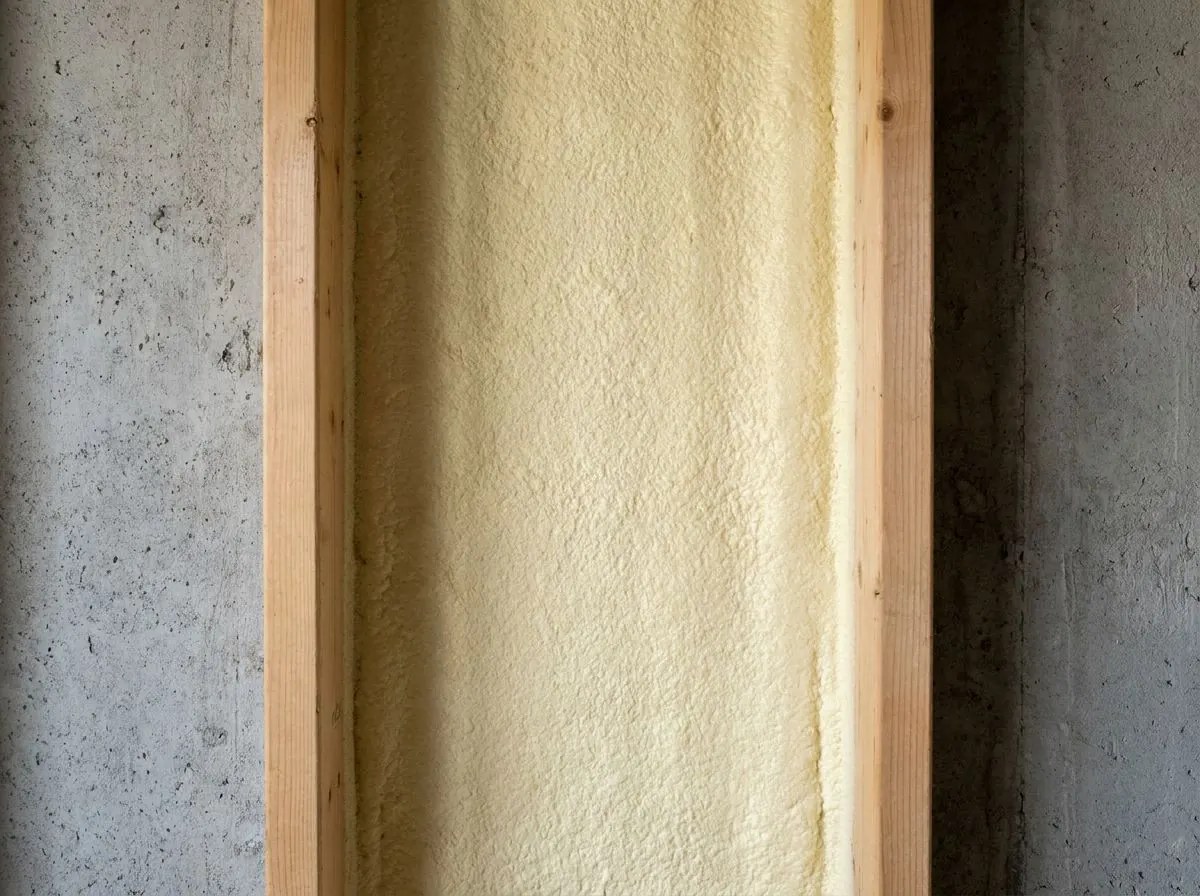
The two foams differ in almost every practical way. Two-pound closed-cell is dense and rigid, commonly about R-6 to R-7 per inch, resists water and at about an inch or two is commonly a Class II vapor retarder, so it belongs on crawl space walls, rim joists, the underside of bonus-room subfloors, concrete and steel. Half-pound open-cell is soft and light, commonly about R-3.5 to R-3.8 per inch and vapor-open. Its big Oklahoma job is the underside of the roof deck, bringing attic ductwork inside a conditioned attic, along with vaulted ceilings and interior walls for sound.
The rest of the category is about using foam with judgment. Flash-and-batt and flash-and-blow put a closed-cell coat where the air leaks are and fill the remaining depth with cheaper batts or blown fill. Under-slab insulation, mostly rigid board with foam around congested plumbing, keeps a radiant floor from heating the clay below it, and it is a niche here. Intumescent coatings such as DC315 give exposed foam in shops, barns and crawl spaces a listed alternative to drywall when they are matched to that foam. Most projects need one or two of these, not all five.
Spray Foam Services
2lb Closed-Cell Spray Foam
Dense 2 lb foam for crawl walls, rim joists, concrete and steel buildings.
How it works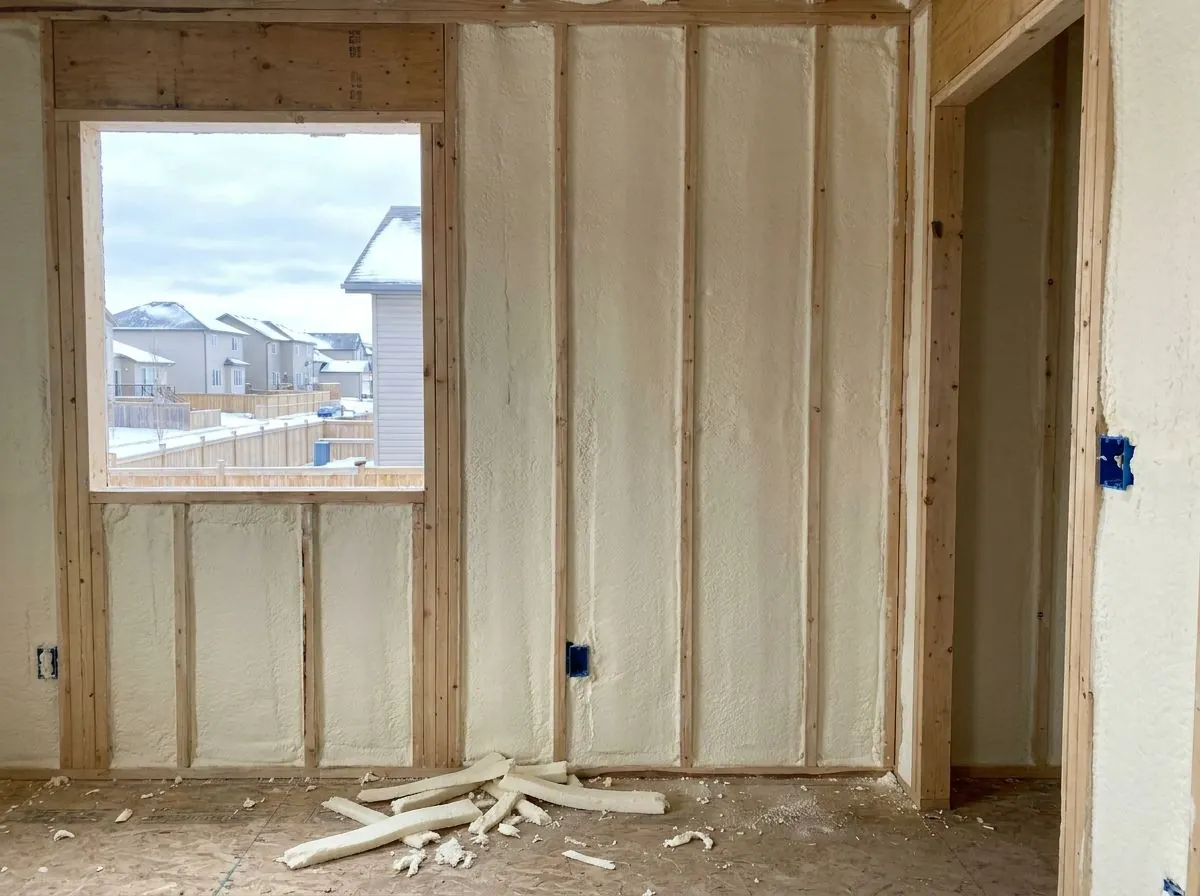
0.5lb Open-Cell Spray Foam
Roof-deck foam around attic HVAC, vaulted ceilings and quieter walls.
How it works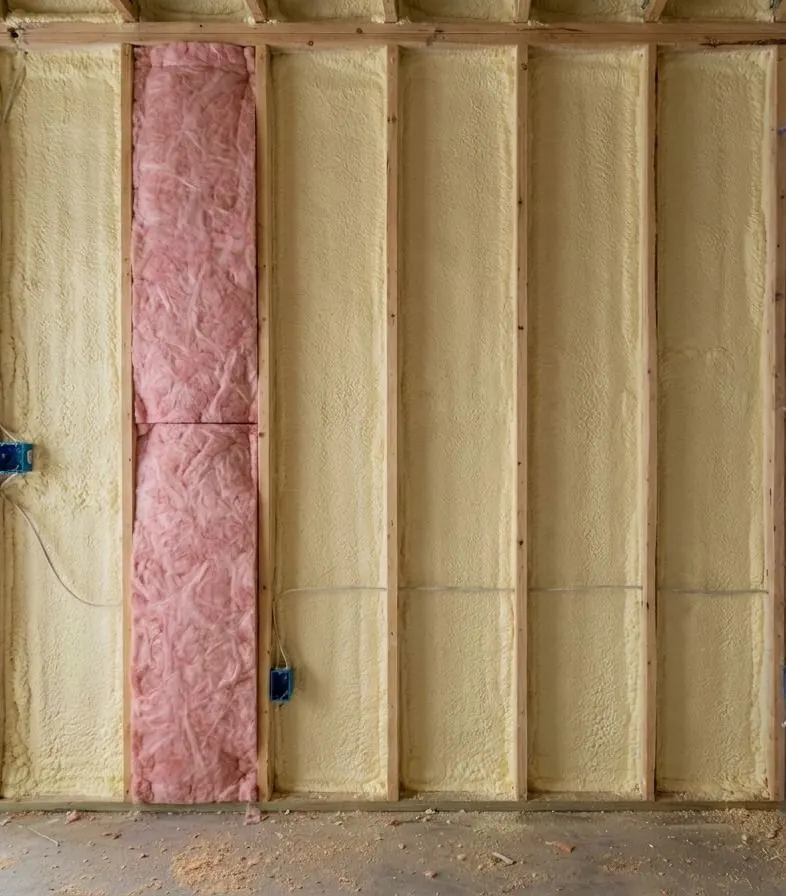
Flash-and-Batt & Flash-and-Blow Systems
Closed-cell flash coat to seal, batts or blown fill for depth.
How it works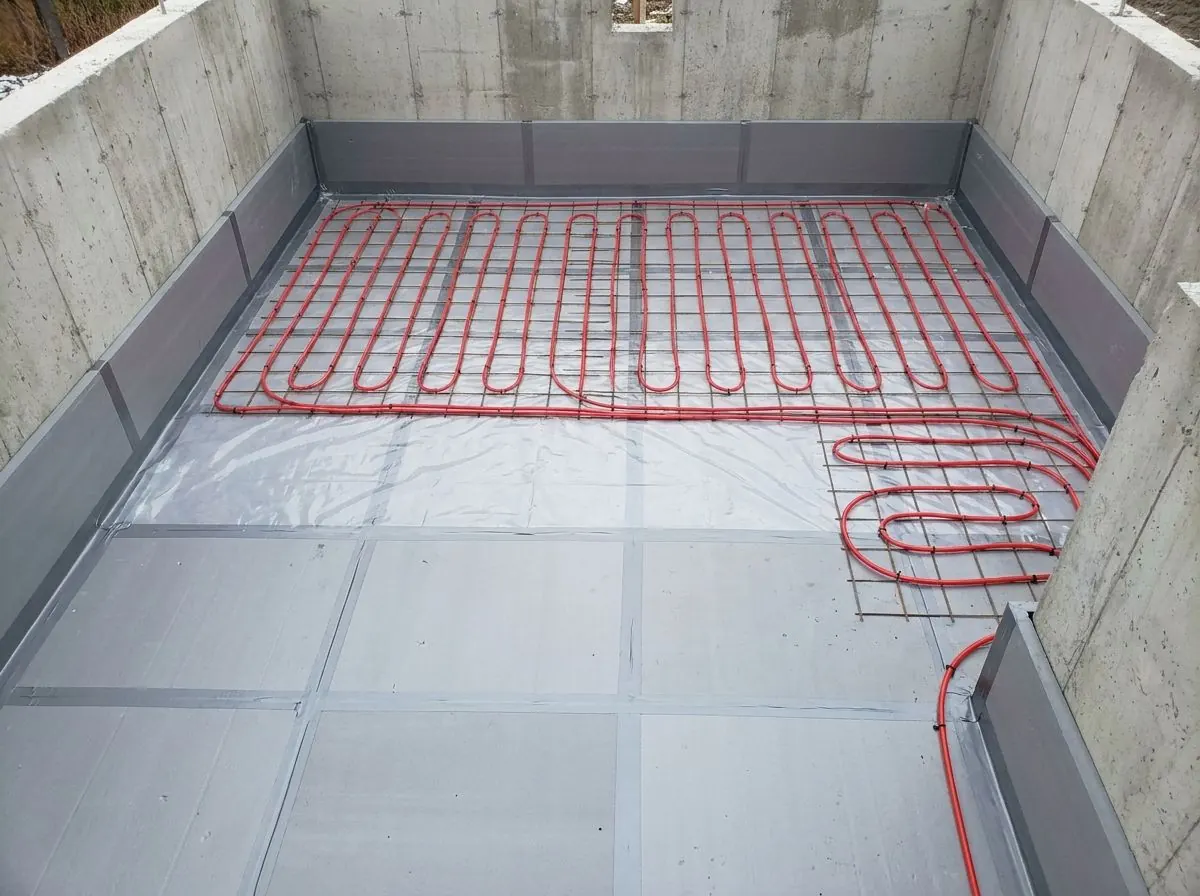
Sub-Slab Rigid & Spray Insulation
Rigid board and spray foam under heated slabs and at the slab edge.
How it works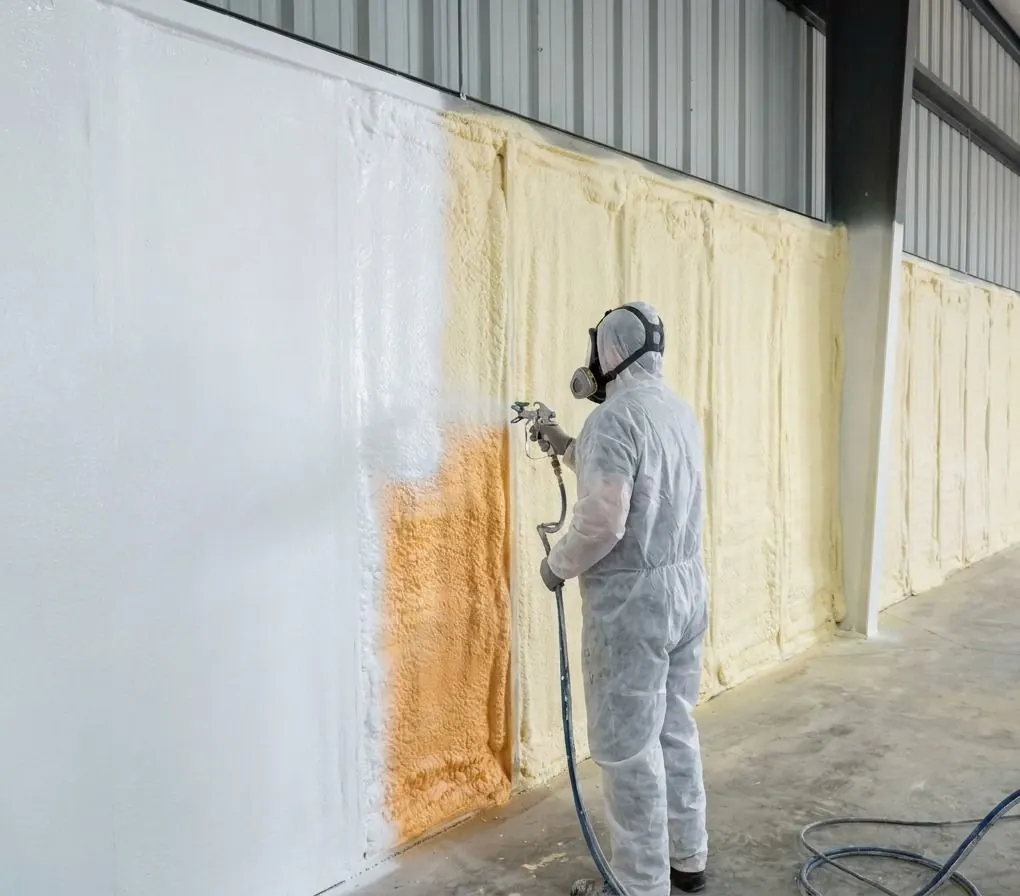
Intumescent Thermal Barrier Coating
Listed intumescent coatings over exposed foam where drywall won't work.
How it worksChoosing Between Them
- Ducts and furnace in the attic
- An open-cell roof deck brings them inside the conditioned envelope. Check the roof's age and talk to your roofer, insurer and HVAC contractor first.
- Concrete, steel or a crawl space
- Closed-cell foam. It bonds, tolerates moisture and seals air in one layer. Check your termite contract before any foam goes on a foundation.
- Open walls on a budget
- Flash-and-batt or flash-and-blow. The closed-cell flash does the sealing and batts or blown fill supply the depth for less per R.
- Heated slab or bare foam
- Under-slab board has to be planned before the pour. Foam left exposed in a shop or crawl needs a coating listed for that foam, or drywall.
Spray Foam: Common Questions
Is spray foam always better than batts or blown insulation?
What paperwork should I get after a spray foam job?
How hard is spray foam to remove if we remodel later?
Other Insulation Services
Talk to Us About Spray Foam
Tell us what the space is and what is going wrong. We will recommend the system that fits, including when a cheaper one will do.