Blown-In Cellulose Attic Top-Ups in Oklahoma City
Cellulose is borate-treated recycled paper fiber blown over your existing attic insulation to bring a thin ceiling up toward R-49. We blow it to the settled depth on the bag chart, work around the ducts and the air handler platform, and tell you first if the attic needs sealing before any fiber goes in.
The Problem It Solves
A lot of attics across the Oklahoma City metro were insulated to whatever the builder installed when the house went up, and in a 1950s or 1960s home that was often a few inches of loose fill or thin batts. Decades of settling and an HVAC crew dragging a replacement unit across the joists leave less than the original job. On a July afternoon the attic runs well above the outdoor temperature, and that heat comes down through every thin spot into the rooms below while the air conditioner runs long cycles trying to keep up.
The attic in most metro homes is not an empty space. The furnace or air handler often sits on a plywood platform up there, with supply ducts snaking across the ceiling joists to every room and a return plenum boxed in beside the equipment. Earlier installers commonly stopped short of the platform, blew thin around the ducts, or skipped the bays a duct runs through because the hose was awkward to work there. The result is a blanket with holes in it right where the ceiling sits closest to the hottest equipment in the house.
Thin insulation is also rarely the only fault. Hot, humid attic air finds its way into the house through open top plates, recessed lights, the hatch and gaps around the return plenum, and in winter the warm indoor air moves the other way. Fiber blown over those leaks hides them without stopping them. A top-up done by eye from the hatch tends to repeat every one of these patterns, which is why we survey the whole attic before quoting a depth.
How It Works
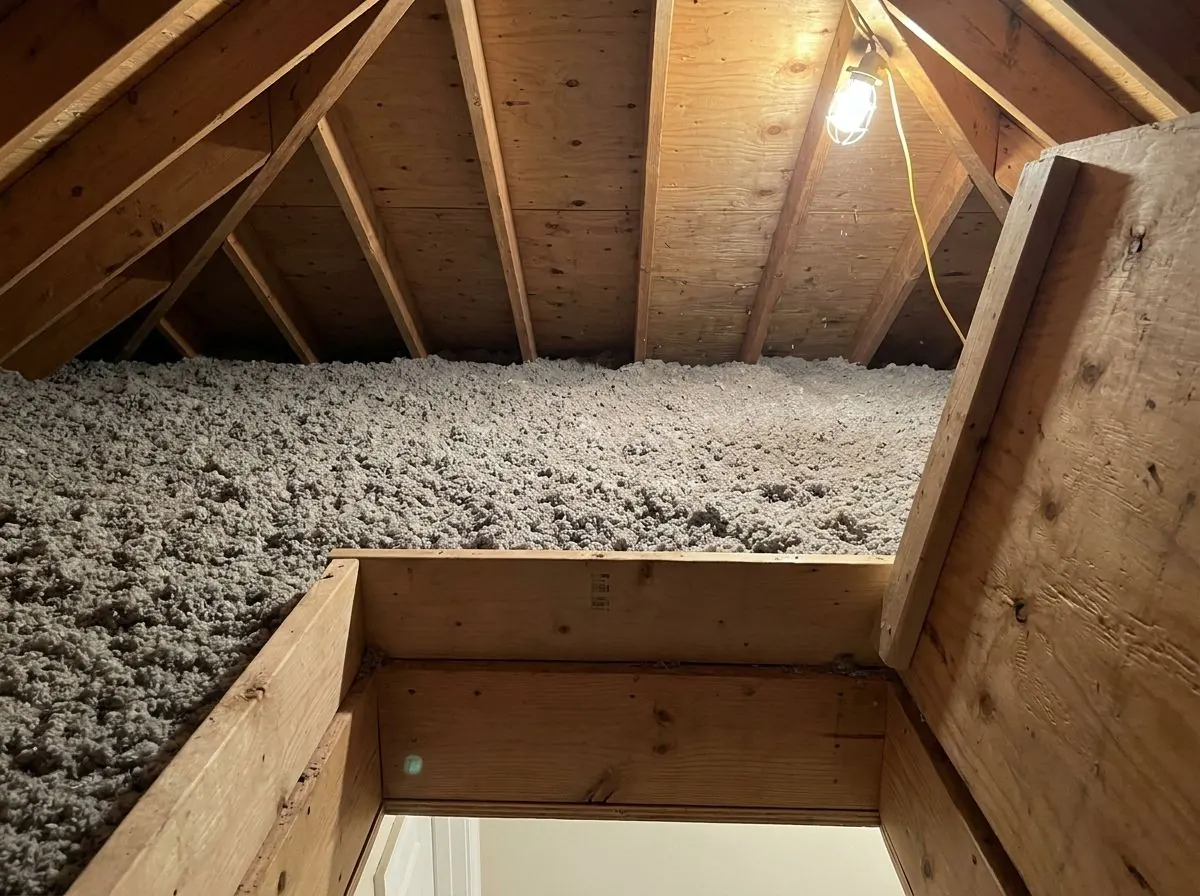
A cellulose top-up lays a continuous new blanket over the old fill. The installer takes the hose to the far eaves first and works back toward the hatch, filling low spots and the bays under and between duct runs before building overall depth. Cellulose is a dense, fine fiber, so a deep layer resists air drifting through it better than lighter loose fill, which helps when Oklahoma wind pushes air in at the soffits. Depth rulers stapled to trusses across the attic give you, and any inspector, a visible check from the hatch.
We blow to the settled depth for R-49 on that product’s chart, with the settling allowance the manufacturer prints, and we count bags against the chart’s coverage figure for the attic area. Bag count is the honest check, because cellulose blown too light looks thick on the day and loses R-value as it settles. Around the HVAC platform we build the fill up to the platform edge and keep a clear service path to the equipment, so the next technician does not have to wade through the new layer or trample it flat. Baffles and ceiling-plane sealing come first, because a foot of fresh fiber makes both far harder to reach later.
How the Job Runs, Step by Step
Attic survey and depth map
We measure existing depth from the hatch out to the eaves, identify the old material, and look for vermiculite, rodent activity, roof-leak staining, bath fans venting into the attic, and the condition of the duct runs and platform. If anything looks like vermiculite, the job stops there until it has been tested.
Prep around ducts and equipment
Rafter vents go in where the soffit bays need them, a dam goes around the hatch, and flues and non-rated recessed lights get the clearances and covers they require. We seal the platform edges and return plenum where that is in scope, and flag disconnected or crushed ducts for your HVAC contractor before fiber covers them.
Protection and depth markers
The blowing machine stays outside and the hose runs to the hatch, with drop sheets along the route through the house. We staple depth rulers to trusses at intervals, including near the eaves and beside the platform, so the finished depth can be read without walking through the new layer.
Blowing to the settled target
The installer starts at the farthest eaves, keeps the hose low to fill under wiring and alongside duct runs rather than bridging over them, and works back toward the hatch. Bags are counted as they go into the hopper and checked against the coverage chart for the attic area at R-49.
Readings and the receipt
We read the rulers across the attic, confirm the baffles are still clear, weatherstrip the hatch and fix rigid insulation to its back, then give you a receipt stating the installed R-value, thickness, coverage and bag count, as the FTC rule requires.
What Decides the Specification
The inches come from the product, not from a rule of thumb. Cellulose products vary in density and coverage, so the settled depth for R-49 shifts between them, commonly landing around 13 to 15 inches. We also account for the old layer: compressed fiberglass or decades-old cellulose still counts for something, but not at its original label value, so we measure it and credit it conservatively. If the existing fill already sits near the target, a top-up changes little, and we will tell you so.
The attic sets the limits. Low-slope ranch roofs leave very little height at the eaves, where the baffle and the settled depth have to share the same few inches. Cellulose is heavier than loose fiberglass, so wide framing spacing or thin, already-sagging ceiling board pushes us toward fiberglass instead. Duct runs on the joists, a low equipment platform and a cramped closet hatch all change how the hose is worked and how evenly the far corners can be reached.
Oklahoma Code Notes
Oklahoma adopted the 2024 IRC with state amendments as its statewide minimum residential code, effective 14 September 2026 (OAC 748:20-6). In the energy chapter as amended for Oklahoma, a new ceiling with an attic in climate zone 3, which takes in the whole OKC metro, is set at R-49. That value governs new construction and permitted work. An existing attic is not legally obliged to reach it, but it is the sensible benchmark. Cellulose loose-fill is made to ASTM C739, and the insulation must not block soffit airflow in a vented attic. Whether a top-up needs a permit is up to the city building department, whether that is Oklahoma City, Midwest City or Choctaw, so we check rather than assume.
General guidance only. The city building department and the product’s own evaluation report decide what applies to your job.
Around Oklahoma City
Midwest City is the clearest case for a cellulose top-up in the metro. It was built out from the 1940s as a planned city for Tinker Air Force Base workers, and its streets of small brick and frame ranch homes often still carry thin original attic fill under older ductwork. Those low-slope roofs need careful work at the eaves, but the attics are usually reachable and the gain from a few inches to a settled R-49 is large. Older site-built homes on the acreages around Choctaw show a similar pattern, often with a replacement air handler perched on a platform the original insulation never reached.
Often Done Alongside
Attic Air Sealing & Penetration Proofing
Hand-sealing attic penetrations, top plates, duct boots and the HVAC platform.
Attic Venting & Baffle Prep
Rafter vents and wind dams that keep soffit-to-ridge airflow open.
Ice Dam & Attic Frost Mitigation
Attic sealing, soffit prep and an R-49 top-up that stops roof melt and summer heat.
Where We Do This Work
Blown-In Cellulose: Questions We Get
Should cellulose cover the ductwork lying across my attic floor?
How much does cellulose settle after it is blown in?
What should my receipt show after a cellulose top-up?
Is cellulose safe to blow around the furnace platform and flues?
Can you insulate an Oklahoma attic in the middle of summer or winter?
Considering Blown-In Cellulose?
Tell Spray Tech Insulation about the job. We will look at it, tell you whether blown-in cellulose is the right fix, and price it in writing.